
-

(86)-0571-82550327
-

info@bfseats.com
-




How to Choose Customizable Tractor Seats: A Buyer's Guide for Comfort & Fit
An operator spending ten hours a day on a tractor isn't just sitting; they are steering, shifting, and constantly twisting to check implements. A fixed, poorly contoured seat turns that workday into a source of chronic lower back strain and fatigue. That is why more fleet managers and owner-operators are moving away from standard equipment seats and toward customizable tractor seats—not for luxury, but for measurable gains in operator endurance, safety, and long-term productivity. This guide covers the practical decisions involved: suspension types, material durability, adjustment mechanisms, and how to ensure the seat you choose actually fits your machine and your operator.
Start with the Conclusion: What Makes a Tractor Seat Customizable ?
A customizable tractor seat is not a bespoke, one-off piece of furniture. In the industrial seating context, customization means the seat platform is designed with modular options that can be configured to match a specific machine, operator weight range, and work environment. The key variables are the suspension system , the adjustment mechanisms , the upholstery material , and the safety features . By adjusting these four groups of components, a single base seat model can serve a sub-compact utility tractor, a large row-crop tractor, or even a telehandler.
The practical impact is straightforward: a properly specified seat reduces whole-body vibration transmitted through the machine, keeps the operator in a stable posture during rough field work, and lowers the risk of operator error caused by fatigue. The difference between a standard OEM seat and a customized one is rarely visual; it is functional.
Choosing the Right Suspension: Mechanical vs. Semi-Suspension vs. Fixed
Most tractor seats on the market are mechanical suspension seats, and for good reason. A mechanical suspension base typically provides between 40 and 90 mm of vertical travel . This travel absorbs impact from uneven terrain and reduces the transmission of low-frequency vibrations to the operator's spine.
When evaluating suspension, ask the supplier for the stroke length, not just the load rating. A seat with a shorter stroke may be suitable for a platform tractor that rarely leaves the yard, but a sprayer or a loader working in rough conditions needs a longer stroke and a damper tuned to the expected weight range. This is one of the areas where the concept of "customizable" becomes critical: the weight adjustment on a mechanical suspension must be matched to the operator's body weight, or the seat will either bottom out or refuse to move.
The options generally break down like this:
- Fixed seats: Fine for light-duty mowing on flat ground, but offer no vibration isolation. They are the cheapest option and usually have a foldable backrest for compact storage, but they do not address operator fatigue on longer shifts.
- Semi-suspension seats: A middle ground that pairs a fixed base with a contoured, shock-absorbing cushion. These are increasingly common on compact tractors and agricultural forklifts where space is at a premium.
- Mechanical suspension seats: The most common choice for primary operator positions. They feature a scissor-link or parallelogram linkage, a shock absorber, and an adjustable weight dial. These are the recommended type for tractors operating in fields, orchards, or on loading duties.
If you operate in environments with prolonged exposure to relatively random vibration—such as a combine harvester running uneven headers all day—look for a model that explicitly offers suspension tuning. The product pages for suspension-equipped agricultural seats often list the stroke and whether the damper is pre-set or field-adjustable.
Materials: Matching Upholstery to the Work Environment
The choice of upholstery and cushioning material is the second major customization decision. It affects both daily comfort and the seat's service life.
PVC and Vinyl: The Workhorse Option
PVC and vinyl are the dominant materials for industrial vehicle seats because they are easy to wipe down, resist oil and agricultural chemicals, and do not absorb moisture. High-density PVC (HD-PVC) is particularly relevant for farm use. It stays dimensionally stable under prolonged sunlight exposure and resists cracking better than lower-cost thermoplastics. For applications where the operator will climb in and out dozens of times per day—loading trucks, moving between machines—a durable PVC cover is a sensible default. A quality black PVC cover with welded seams prevents water ingress into the foam, which is a common cause of premature sagging.
Single-Mold Polyurethane: When Foam Quality Matters
At the higher end of the spectrum, some seats use single-mold polyurethane (PU) foam that is poured directly into the cover or mold. This is a genuine upgrade because the foam density can be varied in different zones of the cushion—firmer at the base, softer at the thigh. This approach also eliminates air pockets and delamination between layers. From a practical standpoint, a single-mold PU seat retains its shape longer and does not absorb moisture, making it a strong choice for operators who spend full days in the saddle and for machines that are parked outdoors.
Consider the trade-off: PVC is easier to repair and replace, while single-mold PU provides better long-term ergonomic support. If the budget allows, the price difference is often justified by reduced operator fatigue over a multi-year replacement cycle.
Key Adjustability Features for Operator Fit
The "custom" part of a custom tractor seat comes from the range and quality of its adjustments. Standard seats usually only slide fore and aft. A properly specified seat should go much further.
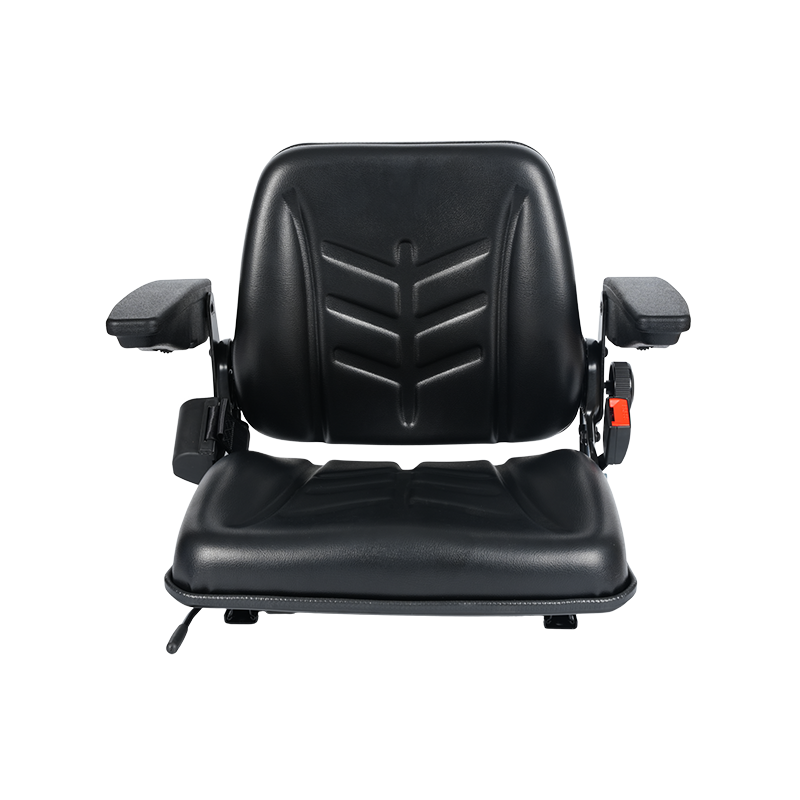
- Foldable backrest: Critical for tractors that spend time on a trailer or in a shed with a low door. A 90-degree folding backrest is also useful for allowing the operator to sit sideways while monitoring a PTO shaft.
- Multi-angle reclining: A backrest that moves through several locked positions, rather than just upright or folded, helps operators alter their posture during long work sessions and reduces load on the lumbar spine.
- Sliding rails: Ensure that the rail travel matches the machine cab dimensions. It is one of the most common installation errors: a seat with a 200 mm slide rail may not fit a compact cab built for a 150 mm rail.
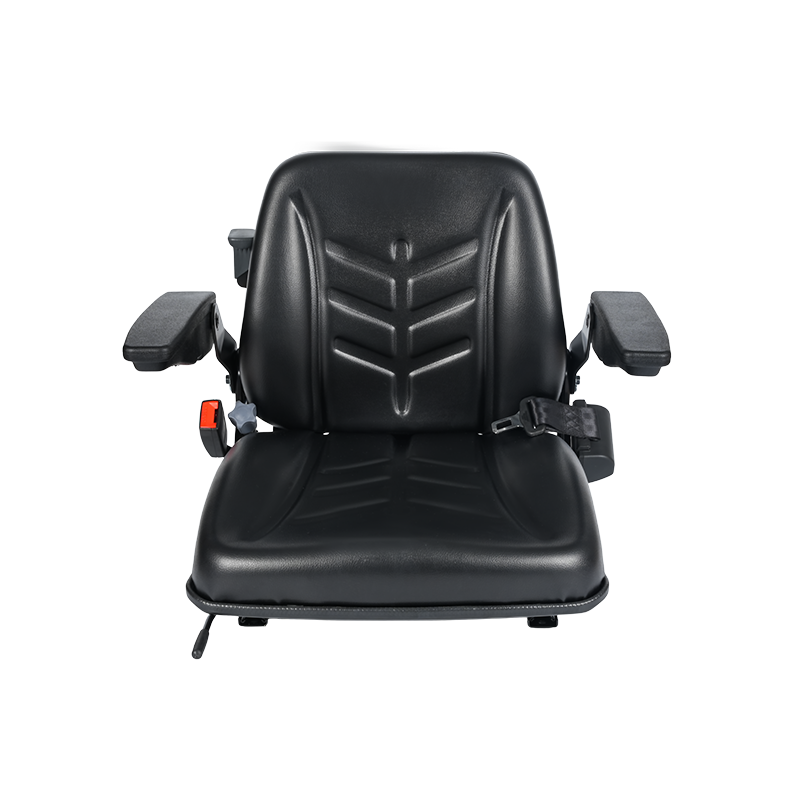
- Armrests: Adjustable armrests are more than a comfort extra. They act as a support point during loader work, reducing shoulder strain. They also help the operator brace against side sway. Check whether the armrests fold up independently of the backrest, as this is vital for access in tight operator stations.
For tractors that are shared between multiple operators of different body sizes, a seat with a wide adjustment range and an easily accessible weight adjustment dial becomes a practical necessity. For example, the ergonomic suspension agricultural seat with CE certification is designed to cover a broad spectrum of driver weights without requiring tools or dealer intervention.
Safety Integration and Standards
Customization must not compromise safety. The two main safety elements on a tractor seat are the seat belt and the operator presence detection system, sometimes called an OPS switch.
For seat belts, a retractable belt is preferable to a fixed two-point belt on tractors with a folding ROPS or where the operator frequently removes the belt. A retractable belt stays out of the way when not in use and reduces the risk of the belt getting caught on controls. The mounting point of the belt also matters: the buckle should sit at the operator's hip, not on the abdomen, and the mounting bracket must be reinforced to prevent tearing in the event of a rollover.
If the seat is being fitted to a machine that has an operator presence system, the seat must be compatible with an OPS switch. This is a purely electrical integration, but it requires the seat to have a stable base plate and a switch mounting location that activates with the operator's weight. Verify with the supplier that the seat's electrical connector matches the tractor's harness, and that the switch's actuation force is compatible with the suspension's deflection characteristics.
Regarding standards, any seat sold for use in the European market should carry a CE mark. For agricultural machinery, the relevant vibration exposure standard is ISO 7096, which determines whether a seat provides adequate attenuation for a specific machine class. A seat tested to ISO 7096 is not a generic claim; it is a statement that the seat has undergone laboratory tests for a defined input vibration spectrum. If your tractor model lists a specific test code (e.g., EM1 or EM7) in its technical documentation, choose a seat that matches that code, or contact the seat manufacturer to confirm the appropriate calibration. Some suppliers offer seats with dual certification to cover multiple machine families. For instance, a dual-certified enclosed cabin seat can cover both forklift and agricultural applications.
Installation and Mounting Considerations
Installation is the point where many seat upgrade projects fail. A seat is more than a cushion; it is a structural component designed to withstand the forces of the vehicle's motion and, in extreme cases, a rollover. Therefore, mounting is not an area for improvised brackets.
Mounting Pattern and Base Plate
Before purchasing, identify the mounting pattern of the existing seat. Common patterns include a four-bolt rectangular pattern (often 160 mm x 200 mm or similar) or a slotted track system. A quality seat product page will list its mounting dimensions; if it does not, request a dimensional drawing before ordering. Avoid seats that require drilling new holes in the cab floor unless you are prepared to reinforce the floor with a load-spreading plate. A new seat's bolt pattern should match the existing holes, or a certified adapter plate should be used.
Suspension Height and Cab Space
Mechanical suspension seats are taller than fixed seats. The suspension base itself adds between 50 and 100 mm to the overall seat height. If your operator wears a helmet or if the cab has a low roof, this extra height can cause head clearance issues. When evaluating a replacement, measure the distance from the floor (or the top of the slide rail) to the roof, then subtract the seat's maximum height and the operator's sitting height. If clearance is borderline, look for a low-profile suspension model with a reduced base height.
For compact tractors and utility vehicles that lack the clearance for a full mechanical suspension, a foldable backrest and a semi-suspension base offer a practical compromise. Matching the seat to the machine's dimensional constraints is a core part of proper specification.
When Is It Better to Choose a Universal Replacement Seat?
There are cases where a site-specific custom seat is unnecessary. If you have a fleet of identical tractors from the same brand, a universal replacement seat with a standard mounting pattern and a broad weight adjustment range is usually the efficient choice. This reduces spare parts inventory and simplifies maintenance.
However, if you operate a mixed fleet with machines from different manufacturers—or if you are upgrading a single older tractor that an operator uses for eight hours a day—then the ability to specify the suspension, material, and accessories individually is worth the extra coordination. The most practical approach is to check whether the base platform of a seat series is shared across multiple applications. Many manufacturers build tractor, forklift, and construction equipment seats on a common suspension platform. This means you get the same ride quality and durability certifications across your fleet, but with configuration options that match each machine. If the seat has a heavy-duty configuration for handlers and telehandlers , it will typically share many components with the agricultural version, simplifying maintenance.
Cost-Benefit: Why Upgrading a Seat Is Not Just an Expense
The upfront price of a brand-new custom tractor seat can range from a modest $150 for a basic fixed PVC seat to over $800 for a single-mold PU seat with mechanical suspension, integrated seat belt, and armrests. However, the calculation should include the cost of downtime to swap the seat, the effect on operator retention, and the long-term cost of vibration-related injuries. A seat's value is best measured in cost per operating hour.
A practical comparison is presented in the table below.
| Seat type | Approx. purchase price | Typical service life | Estimated cost per hour | Best suited for |
|---|---|---|---|---|
| Fixed PVC seat | $150-250 | 2-3 years | $0.03-0.08 | Occasional use, short shifts, flat terrain |
| Semi-suspension PVC | $250-400 | 3-4 years | $0.04-0.10 | Small tractors with limited cab space |
| Mechanical suspension, HD-PVC | $350-550 | 4-5 years | $0.04-0.12 | Daily field work, rough terrain |
| Mechanical suspension, single-mold PU | $550-800 | 5-7 years | $0.04-0.12 | Heavy-duty use, large operators, full-day shifts |
Note that the cost per hour difference between a basic fixed seat and a premium mechanical suspension seat is negligible when spread over the service life, while the operator comfort difference is substantial.
There are several ways to reduce the total cost without sacrificing quality. One is to standardize on a seat platform that shares replacement parts across the fleet. Another is to work with a manufacturer directly rather than through a dealer. Hangzhou Benfeng Auto Seat Co., Ltd., for example, is a Chinese manufacturer of industrial vehicle seats with a production facility of 14,000 square meters and an annual capacity of 200,000 seat sets. Because it supplies seats to major forklift and logistics equipment OEMs, it is well positioned to provide cost-effective seats without compromising on quality, and its status as a drafting unit of the Chinese industry standard JB/T13693-2019 for driver seats on industrial vehicles underlines its engineering credibility.
What to Check Before You Order
To avoid a costly mistake with a custom tractor seat, there are a few things you should verify before placing the order.
- Confirm the exact mounting pattern of the current seat and compare it with the new seat's dimensions. Do not rely on universal brackets unless you can test them on the actual machine.
- Measure the maximum available vertical space in the cab with the operator seated. A mechanical suspension seat may not fit where a fixed seat used to sit.
- Check the belt type. A retractable belt is safer and more convenient for frequent ingress and egress.
- Decide on the material based on the cleaning regimen. If the cab is washed with a pressure washer, choose a fully sealed PVC cover.
- If the tractor is subject to vibration regulations, request the suspension's ISO 7096 test data for the specific machine class. Make sure the manufacturer can document compliance.
- For shared tractors, verify that the seat's weight adjustment range covers the full spread of operator weights, from the lightest to the heaviest.
A reputable seat manufacturer should be able to provide a dimensional drawing and a suspension test report. Many suppliers also offer matched accessories, such as armrests, seat belts, and seat slide rails, which is useful if you plan to fully rebuild the operator station at the same time.
Final Takeaways
Choosing a customizable tractor seat comes down to a few specific engineering and purchasing decisions: matching the suspension to the machine's vibration and operator weight, selecting a durable material for the environment, and verifying the mounting geometry before ordering. The hours a farmer or operator spends in a tractor are not optional downtime; they are production time. A seat that fits well, supports the lumbar area, and isolates vibration will not just be more comfortable—it will also support alertness and reduce the physical wear on the operator. When you compare the price of a seat upgrade against the cost of operator fatigue and lost productivity, the argument for a properly specified seat is easy to make. A high-quality seat from a certified manufacturer is a component with a measurable return on investment.
For fleet buyers considering a durable mechanical foldable seat for agricultural forklifts or a heavy-duty suspension option, the final recommendation is to prioritize suspension travel and material quality over cosmetic add-ons. These two aspects are the hardest to retrofit later and provide the most meaningful improvement to the operator's daily experience.
-
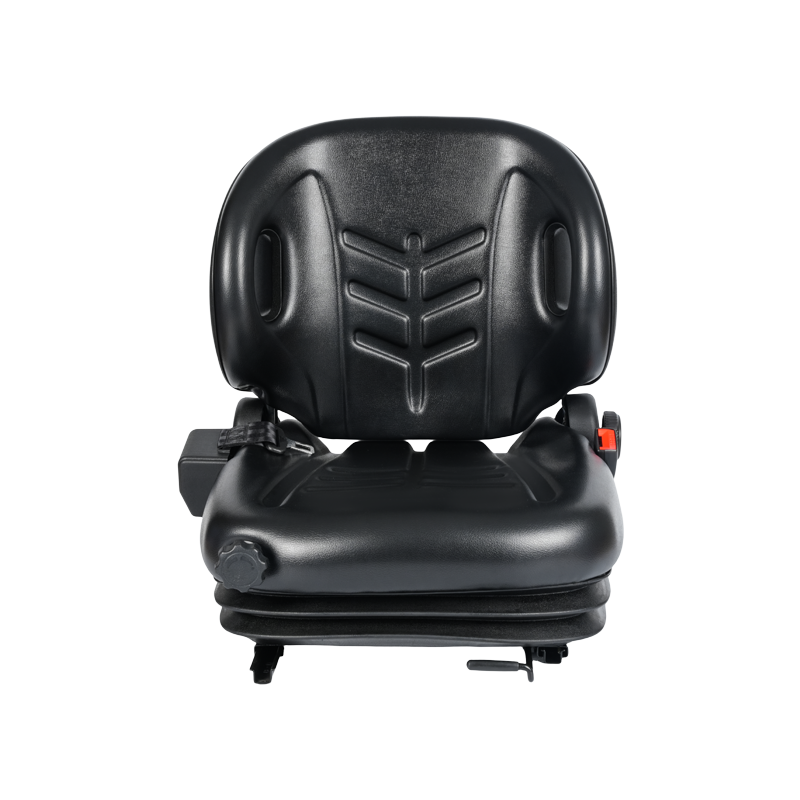
BF2-3AB EN13490 IT1+IT2 認定カウンターバランス フォークリフト シート メカニカル サスペンション OPS スイッチ & ユニバーサル多機能マウント システム付き トヨタ ユングハインリッヒと互換性あり
-
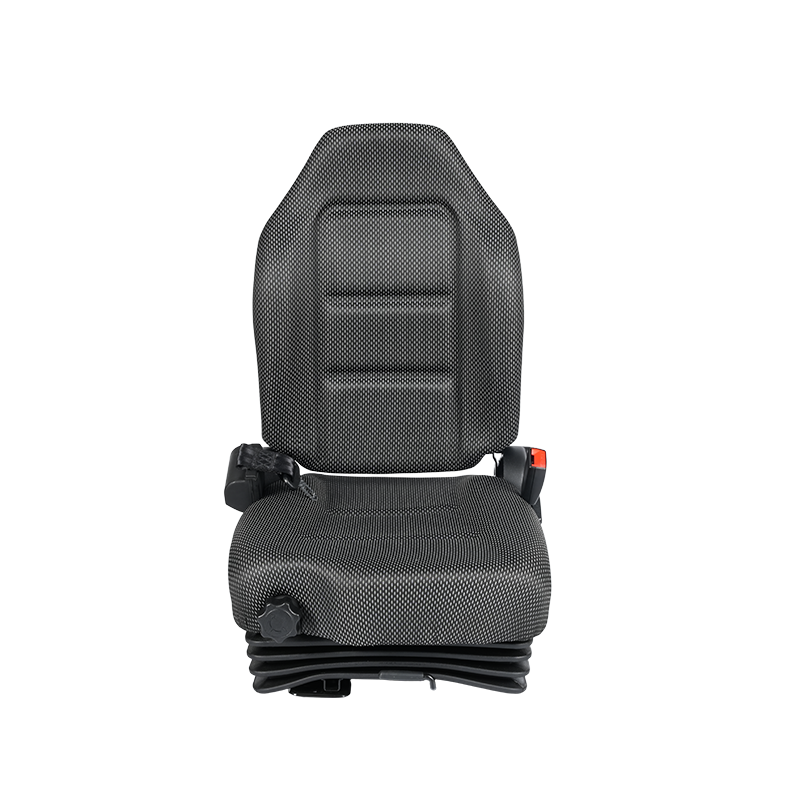
BF6-3 EN13490 IT1 認定リーチトラックシート、格納式シートベルト & 衝撃吸収 & OPS スイッチ付きリチウムバッテリーフォークリフト用 Hyster、Jungheinrich と互換性あり
-
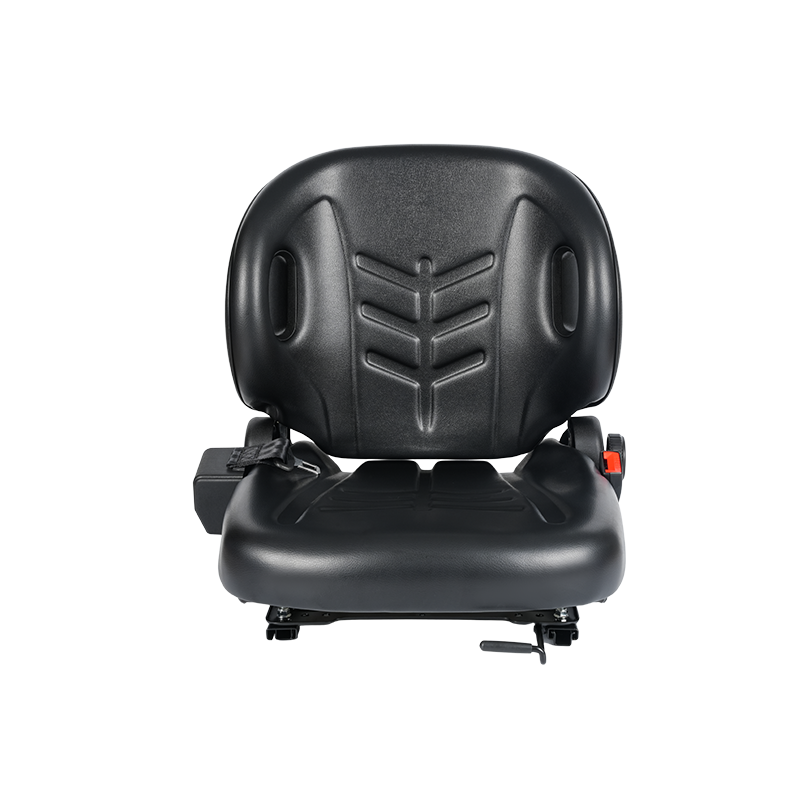
BF2-2 Universa 電動スタッカー オペレーターシート - 防水ブラックコーティングされた 4 ウェイストレッチ布 PVC OPS センサースイッチ & 調節可能なバックレスト付き Hangcha、トヨタと互換性あり
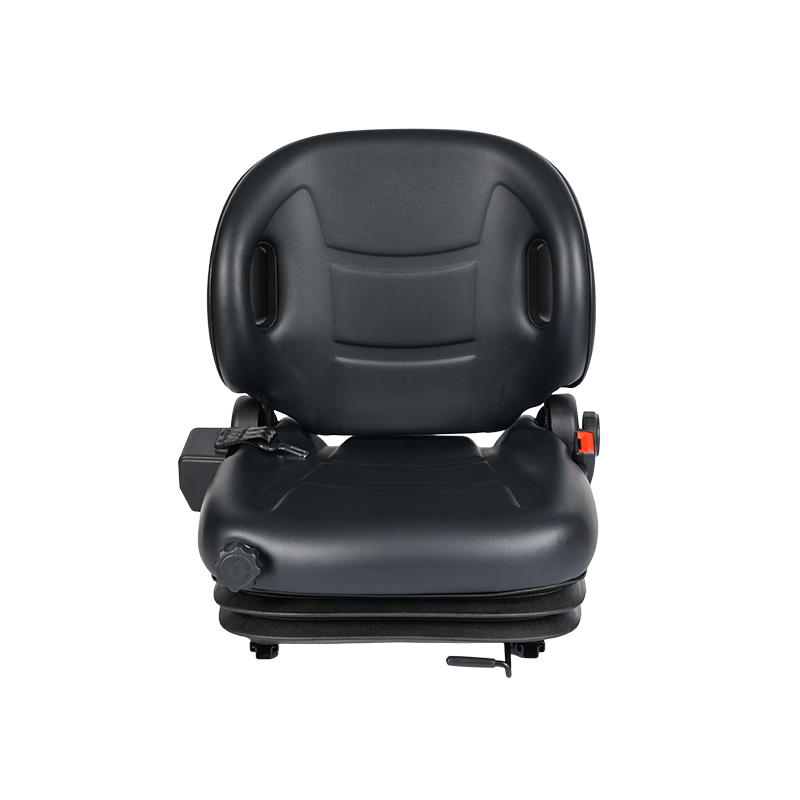
著作権 @ Hangzhou Benfeng Auto Seat Co., Ltd. All rights reserved OEM/ODM 人間工学に基づいた産業用シート メーカー
浙ICP备20022099号